MintLeaf Early Years Learning Centre Desa ParkCity
MintLeaf Early Years Learning Centre Desa ParkCity
Nurturing non-cognitive skills (MintLeaf Method)
A multilingual environment (English / Japanese / Chinese / Malay)
Creative arts
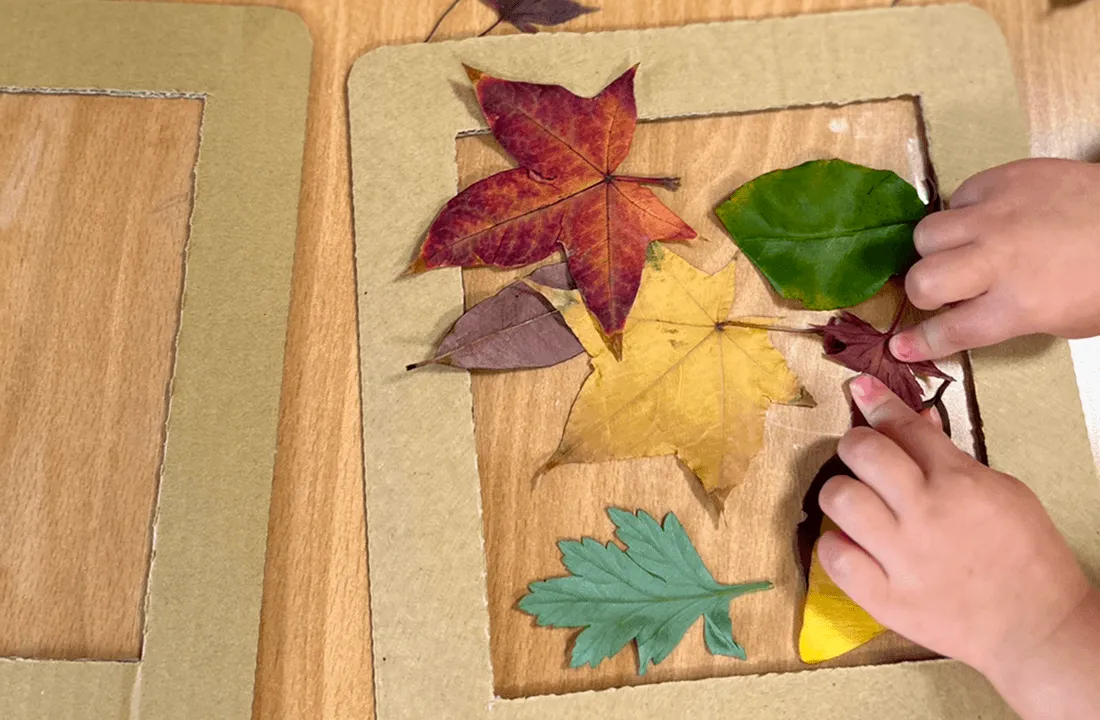
Inquiry-based exploration
About MintLeaf
One unique aspect of our progrm is that we view children, not as future adults, but as fully functioning people, just at a differnt level of development. With this in mind, we believe that the most important thing for children’s future success, is to have a rich childhood full of play and experiences. By providing an environment where children can learn through play and developmentally appropriate activities, children’s “non-cognitive skills” will develop from early childhood in order to cultivate the basic skills of active learning, which will be essential skills in elementary and junior high schools. Because the concept of education has shifted from “teaching” to “co-learning”, it is necessary that teachers support children instead of instruct children one-sidely so as to nurture self-driven individuals. In the age when today’s children will be adults, we will live in a completely different world under further progress of globalization, robotics and artificial intelligence. Looking to the future of the next generations, we take care of your children with the aim of maximizing the abilities they will really need, all while allowing them to experience the joys of childhood.
Our unique approach: The "MintLeaf Method"
We introduce a unique educational approach inspired by the Municipal Schools of Reggio Emillia, Italy, as well as other current trends in Early Childhood Education. Reggio Emilia education is well known as one of the world’s best early childhood education programs for bringing out the skills and abilities that the next generations need. This approach inspires preschools that are run by global companies such as Google, Disney, and World Bank.
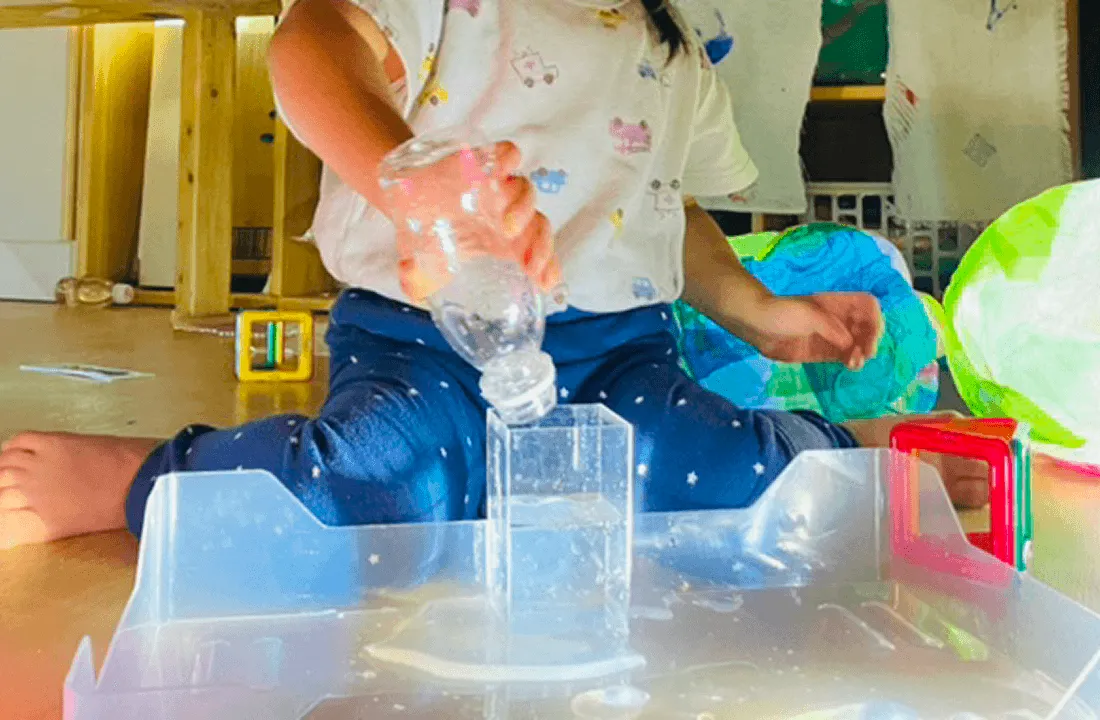
Play Using the Five Senses
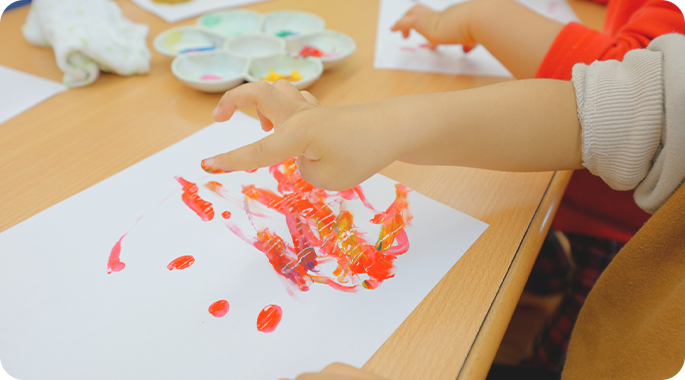
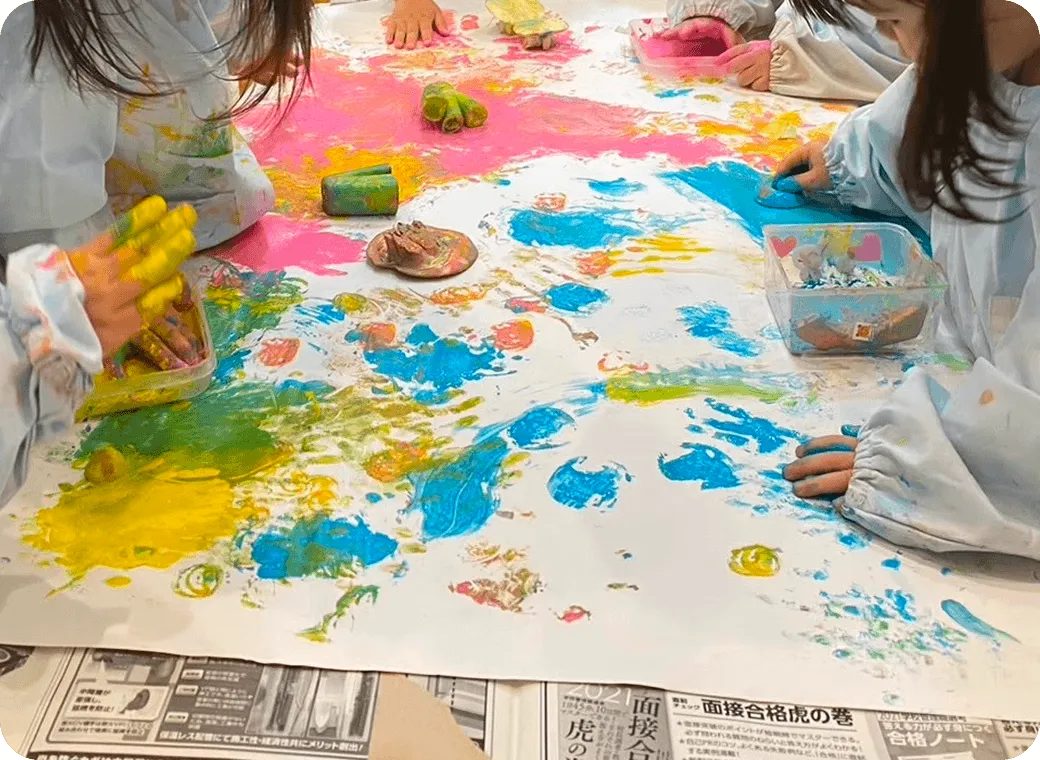
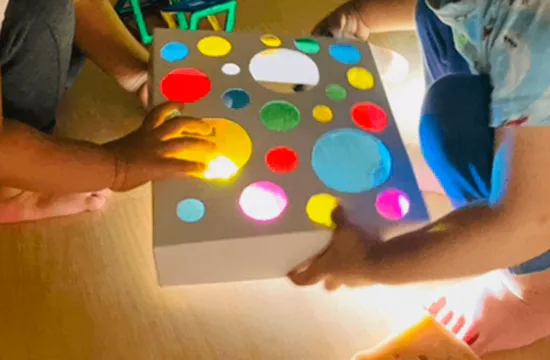
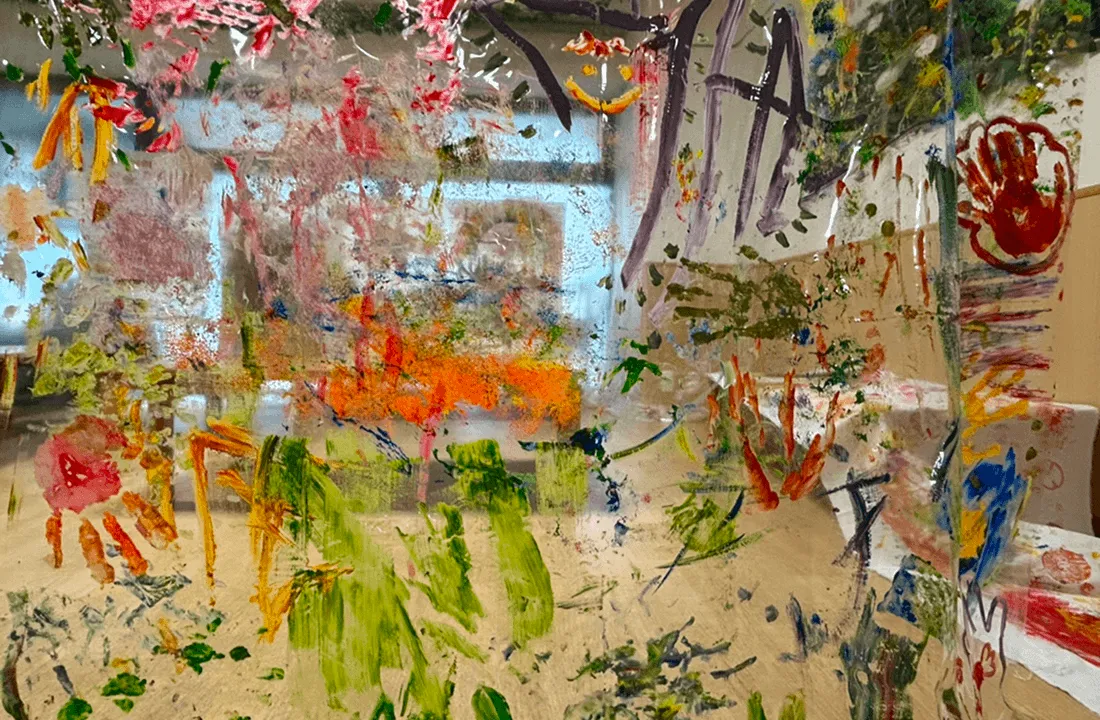
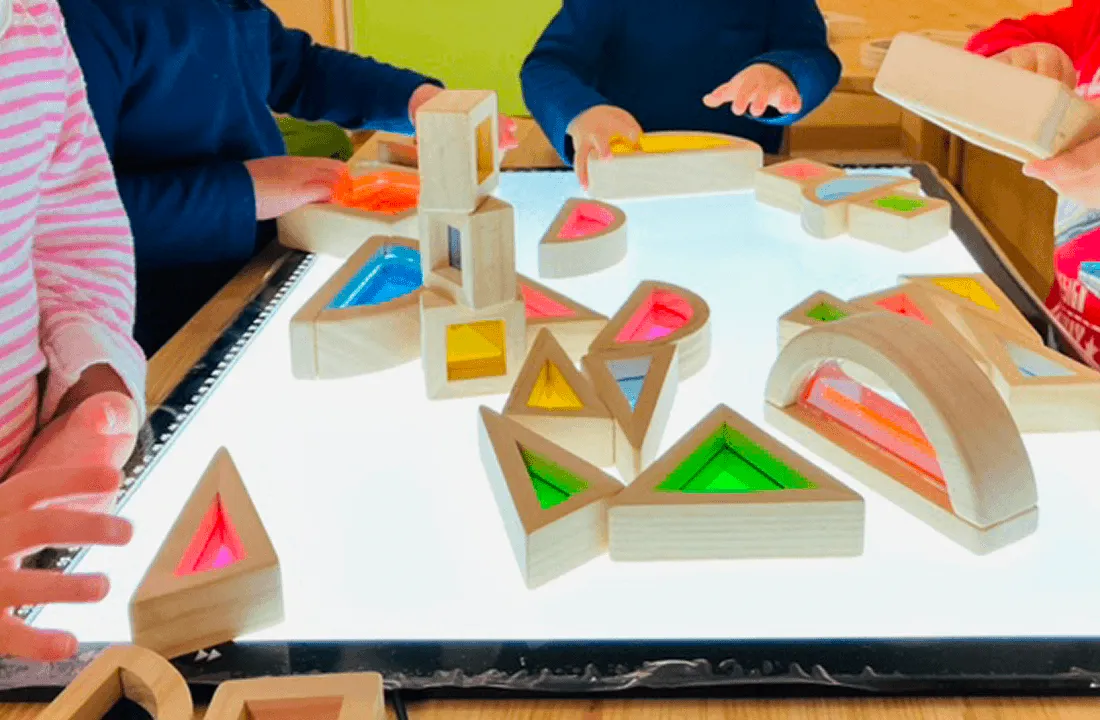
Using all five senses is essential for the development of both the brain and the body. We create an environment where children can fully engage in play through their senses. Every word from a caregiver becomes part of the environment. During art and sensory play, there are many moments when children are deeply focused on their own exploration. At such times, we respect their first encounters with sensations and materials̶before they are put into words̶and ensure they have enough time to fully experience them. When a child looks up with satisfaction after being immersed in play, or begins to seek connection with others, we gently engage with them. Rather than simply praising, we share what we noticed and felt as caregivers, saying things like, “I see you used lots of paint,” or “That line is interesting,” to build a sense of empathy and connection. The time a child spends deeply engaged in play is something we treasure, as is the moment they look up and say, “Look at this!” These are both important opportunities for building relationships. We value both equally as we interact with children.
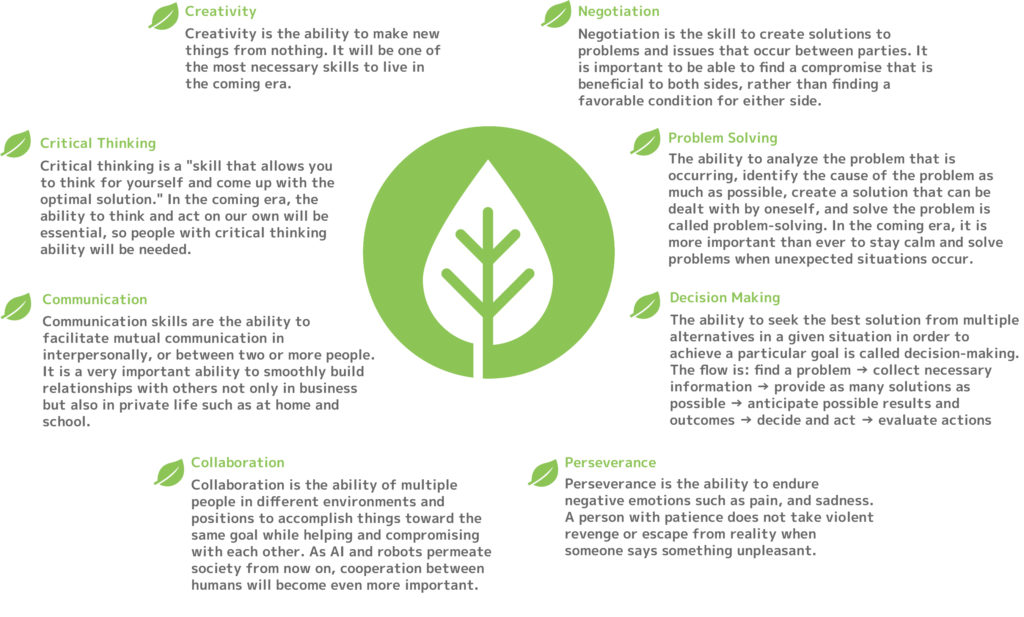
What are Non-cognitive skills?
Creativity
Creativity is the ability to make new things from nothing. It will be one of the most necessary skills to live in the coming era.
Critical Thinking
Critical thinking is a “skill that allows you to think for yourself and come up with the optimal solution.” In the coming era, the ability to think and act on our own will be essential, so people with critical thinking ability will be needed.
Communication
Communication skills are the ability to facilitate mutual communication in interpersonally, or between two or more people. It is a very important ability to smoothly build relationships with others not only in business but also in private life such as at home and school.
Collaboration
Collaboration is the ability of multiple people in different environments and positions to accomplish things toward the same goal while helping and compromising with each other. As AI and robots permeate society from now on, cooperation between humans will become even more important.
Negotiation
Negotiation is the skill to create solutions to problems and issues that occur between parties. It is important to be able to find a compromise that is beneficial to both sides, rather than finding a favorable condition for either side.
Problem Solving
The ability to analyze the problem that is occurring, identify the cause of the problem as much as possible, create a solution that can be dealt with by oneself, and solve the problem is called problem-solving. In the coming era, it is more important than ever to stay calm and solve problems when unexpected situations occur.
Decision Making
The ability to seek the best solution from multiple alternatives in a given situation in order to achieve a particular goal is called decision-making. The flow is: find a problem → collect necessary information → provide as many solutions as possible → anticipate possible results and outcomes → decide and act → evaluate actions
Perseverance
Perseverance is the ability to endure negative emotions such as pain, and sadness. A person with patience does not take violent revenge or escape from reality when someone says something unpleasant.
Facility Overview
MintLeaf Early Years Learning Centre Desa ParkCity
Monthly Enrollment / Temporary Childcare
Address D-G-3, Plaza Arkadia, Kuala Lumpur, Malaysia, 52200 , Kuala Lumpur, Malaysia, 52200 TEL/WhatsApp +60 10-712-7269 E-mail dpc@zen-inc.co.jp
Eligible Age From 6 months old to 6 years old
Opening Days & Hours Monday to Friday &Saturday(Event day) 8:00 AM – 7:00 PM (Standard childcare hours: 8:00 AM – 5:00 PM)